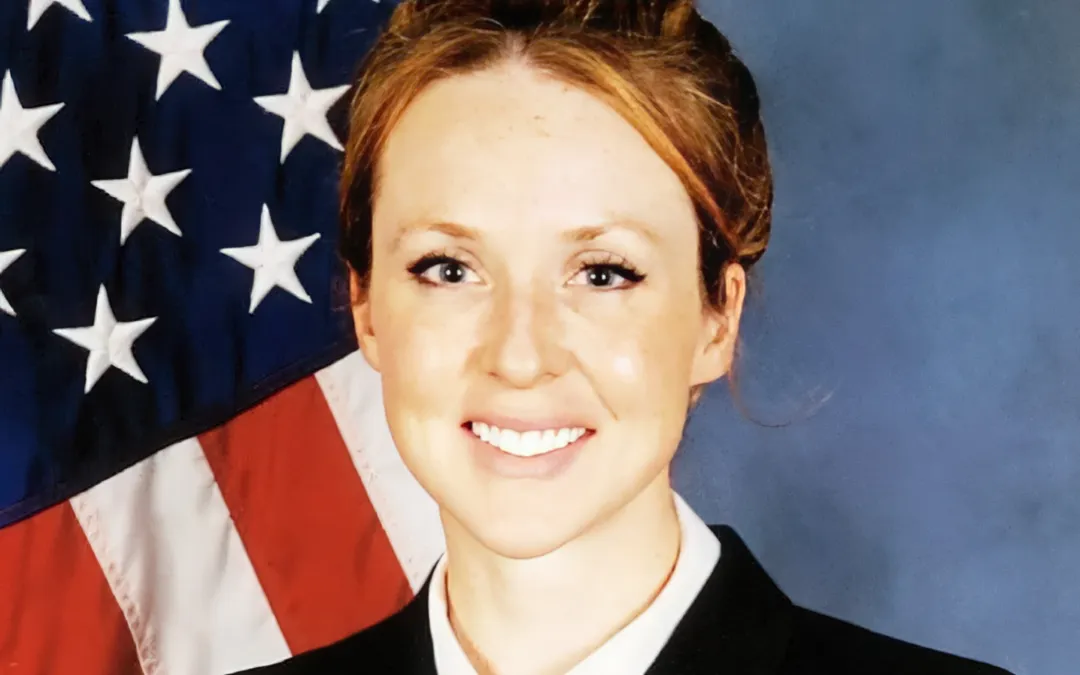
“Shannon’s story is a story of service and love. She did something truly unique for our country and did everything with love in her heart,” said Joe Kent, reflecting on the life and legacy of his wife, Shannon Kent, a highly decorated United States Navy intelligence specialist.
Shannon Kent was born in 1983 in New York and joined the Navy in 2003, where she served as a cryptologic technician. Over the years, she completed five combat deployments, showcasing her commitment to her country. Proficient in multiple languages, including Spanish, French, Portuguese, and Arabic, Shannon was deployed to Afghanistan in 2008 to assist a Navy SEAL team. Her skills and dedication were evident throughout her military career.
In November 2018, Shannon was deployed to Syria as a Navy Chief Cryptologic Technician. This deployment came after a successful battle with thyroid cancer in 2006 and a series of challenging military assignments. Joe Kent, who dedicated 20 years to the U.S. Army and undertook 11 combat deployments himself, met Shannon during the selection course for the Intelligence Support Activity, and they married in 2014.
On January 16, 2019, Shannon Kent was killed in a suicide bombing in Manbij, Syria, an attack that also claimed the lives of three other Americans and 15 fighters from the Syrian Democratic Forces. This tragic event marked one of the deadliest attacks on American personnel in Syria, highlighting the personal cost of U.S. counterterrorism operations.
Joe Kent described the loss of his wife as devastating, stating, “I’m grateful for every moment we had & for the lives we created. Shannon was an amazing wife, mother, friend, sister & daughter. Shannon eternal.” His words reflect the profound impact Shannon had on those around her and the love that defined their family life.
In the wake of her death, Joe Kent has been vocal about the implications of military engagements, stating, “I cannot support sending the next generation off to fight and die in a war that serves no benefit to the American people nor justifies the cost of American lives.” His sentiments resonate with many who question the ongoing military presence in conflict zones.
Shannon Kent’s legacy lives on, not only in the memories of her loved ones but also in the recognition of her service. She is buried at Arlington National Cemetery, a testament to her dedication and sacrifice for her country. As discussions about U.S. military involvement continue, her story serves as a reminder of the human cost of war.
As the nation reflects on the sacrifices made by service members like Shannon Kent, the conversation around military strategy and the future of U.S. involvement in foreign conflicts remains crucial. The impact of her life and the lives of others lost in similar circumstances will continue to shape the dialogue on military engagement.