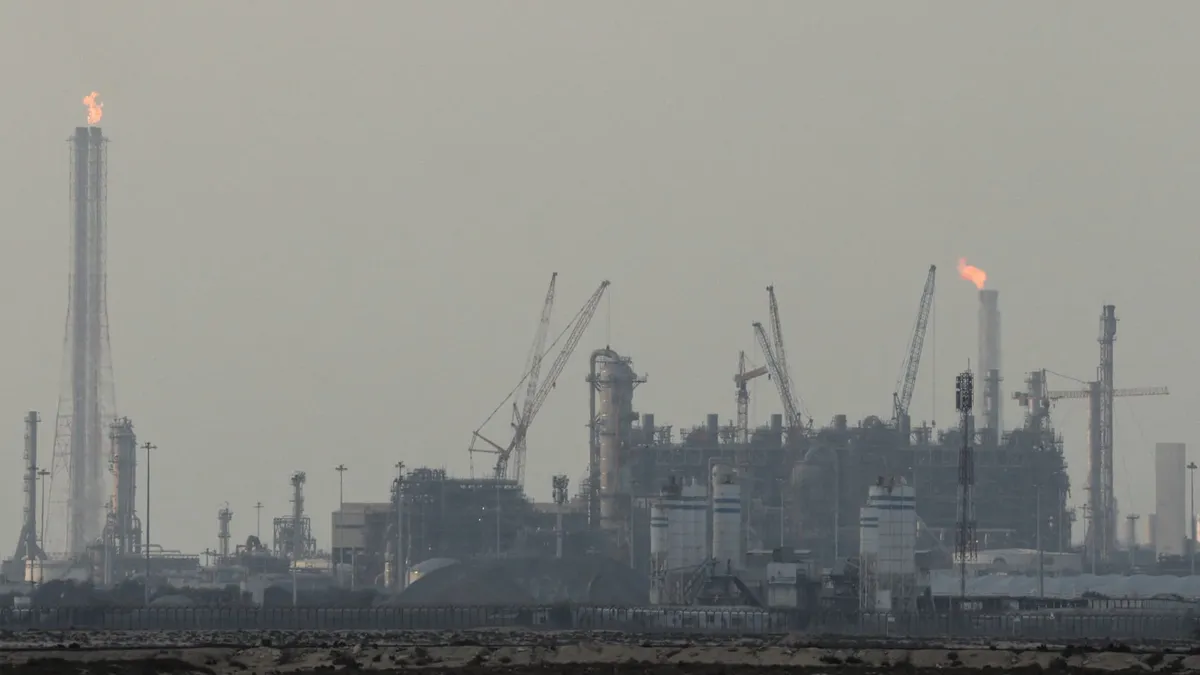
On March 18, 2026, Iranian missiles targeted Ras Laffan Industrial City in Qatar, causing extensive damage to the facility, which is home to the largest LNG export terminal in the world. Fortunately, no casualties have been reported following the attack.
The Qatari Foreign Ministry swiftly condemned the missile strike, labeling it a dangerous escalation and a violation of the nation’s sovereignty. This incident follows a series of Iranian drone strikes that had already forced Qatar to halt LNG production earlier in March.
Ras Laffan Industrial City is crucial to the global energy supply, accounting for nearly 20% of the world’s LNG exports. The attack has raised concerns about the stability of energy supplies, particularly as Brent crude prices surged more than 7% to $111.23 per barrel in the aftermath.
In a related development, Qatar declared military and security attaches from the Iranian embassy as persona non grata, giving them 24 hours to leave the country. This action reflects Qatar’s heightened security measures in response to ongoing threats from Iran, which has previously threatened to target oil and gas facilities across the Gulf region.
The geopolitical landscape has been increasingly tense, with Iran’s Revolutionary Guard previously indicating intentions to attack energy infrastructure in Qatar, Saudi Arabia, and the UAE. The Strait of Hormuz, a vital passage for global oil and LNG supply, remains a focal point of these escalating tensions.
Diesel prices in the United States have also seen a spike, rising above $5 a gallon, further illustrating the ripple effects of the conflict on global energy markets. The situation is compounded by the fact that the UAE has faced 327 ballistic missiles since the onset of these attacks.
QatarEnergy confirmed that all personnel at the Ras Laffan facility have been accounted for, emphasizing that no casualties have been reported at this time. The company reassured stakeholders that operations would be assessed and restored as soon as it is safe to do so.
In a statement, Qatar’s Ministry of Foreign Affairs reiterated, “Qatar considers this assault a dangerous escalation, a flagrant violation of its sovereignty, and a direct threat to its national security.” The ongoing conflict has drawn international attention, with calls for de-escalation and dialogue among the involved parties.
As the situation develops, the implications for global energy supply and regional stability remain uncertain. Details remain unconfirmed regarding the full extent of the damage and the potential for further retaliatory actions.