Introduction
‘Wuthering Heights’, Emily Brontë’s only novel published in 1847, has long captivated readers with its dark themes of love, revenge, and social class. The story of Heathcliff and Catherine Earnshaw explores the depths of passion and anguish, making it a timeless classic that has inspired numerous film adaptations over the decades. Understanding the significance of these adaptations sheds light on the ongoing relevance of Brontë’s masterpiece in contemporary culture.
Film Adaptations and Their Impact
The first film adaptation of ‘Wuthering Heights’ was released in 1939, directed by William Wyler and starring Laurence Olivier as Heathcliff and Merle Oberon as Catherine. The film, while not entirely faithful to the novel, introduced the tragic romance to a wider audience and is noted for its atmospheric cinematography and powerful performances. It remains a significant interpretation of Brontë’s work, often lauded for its romantic aesthetic.
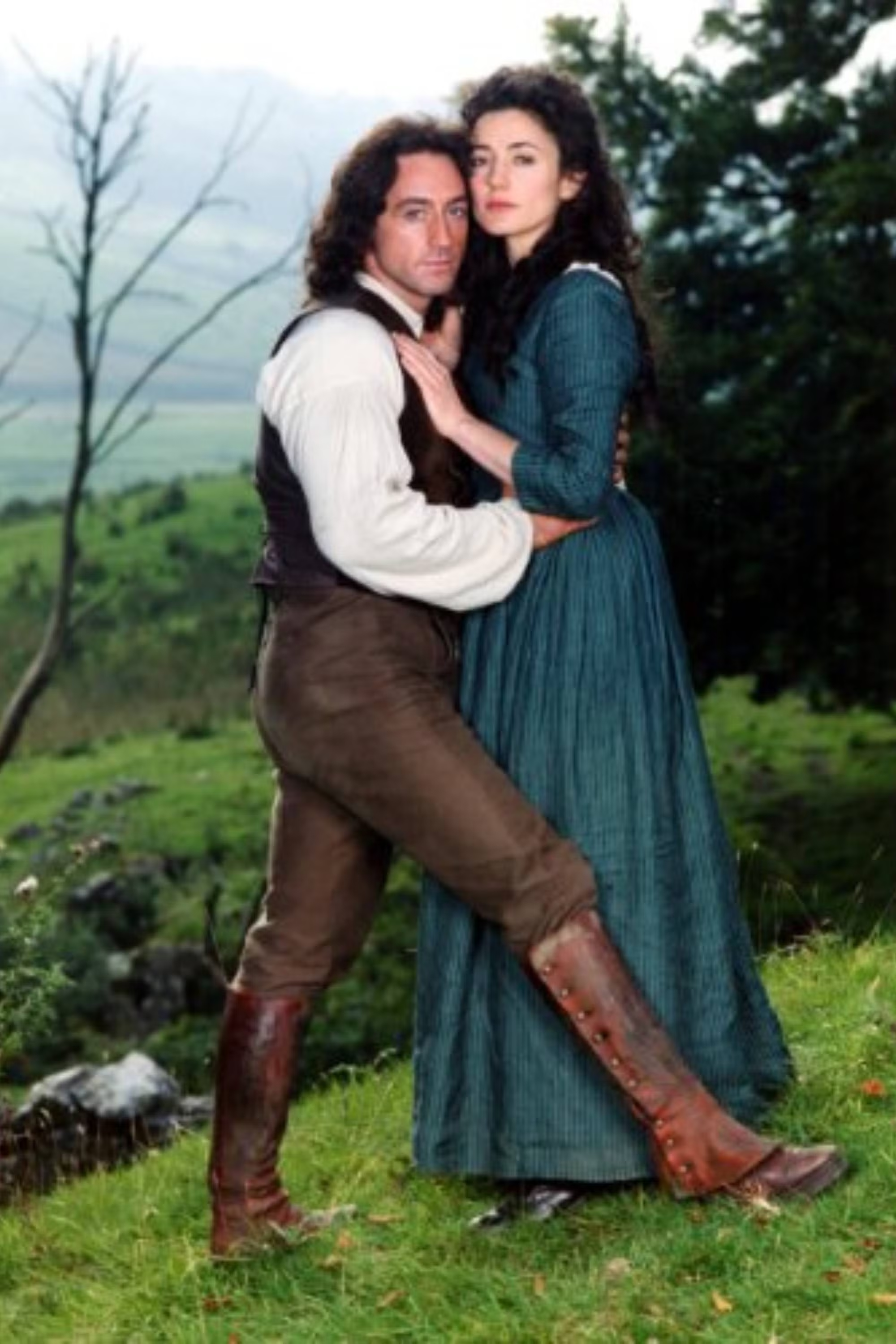
Subsequent adaptations have taken various approaches to the source material. In 1970, a version directed by Robert Fuest offered a more traditional retelling, whilst the 1992 adaptation starring Ralph Fiennes and Juliette Binoche attempted to emphasise the psychological aspects of the characters, exploring their tortured minds. Furthermore, the 2011 adaptation directed by Andrea Arnold garnered attention for its gritty realism, a departure from the romanticised portrayals often seen in earlier films. Arnold’s version focused on the raw, elemental urges of the characters, aligning the film’s aesthetic with the harsh nature of the Yorkshire moors where the story takes place.
Current Relevance and Future of Adaptations
As audiences continue to revisit ‘Wuthering Heights’, the various interpretations reflect changing social attitudes towards themes like love, class struggle, and morality. The novel’s enduring quality suggests that its complex characters and moral ambiguities will keep drawing filmmakers to explore new interpretations. In recent years, discussions around adapting the novel for modern television series and films have surfaced, showcasing the continuous interest in Brontë’s work.
Conclusion
The fascination with ‘Wuthering Heights’ and its film adaptations illustrates the power of storytelling across generations. As each adaptation unveils different nuances of the text, contemporary audiences are encouraged to reflect on societal changes and personal values. The legacy of ‘Wuthering Heights’ in cinema remains significant, ensuring that Brontë’s dark tale will continue to resonate for years to come, reaffirming its place in literary and cinematic history.