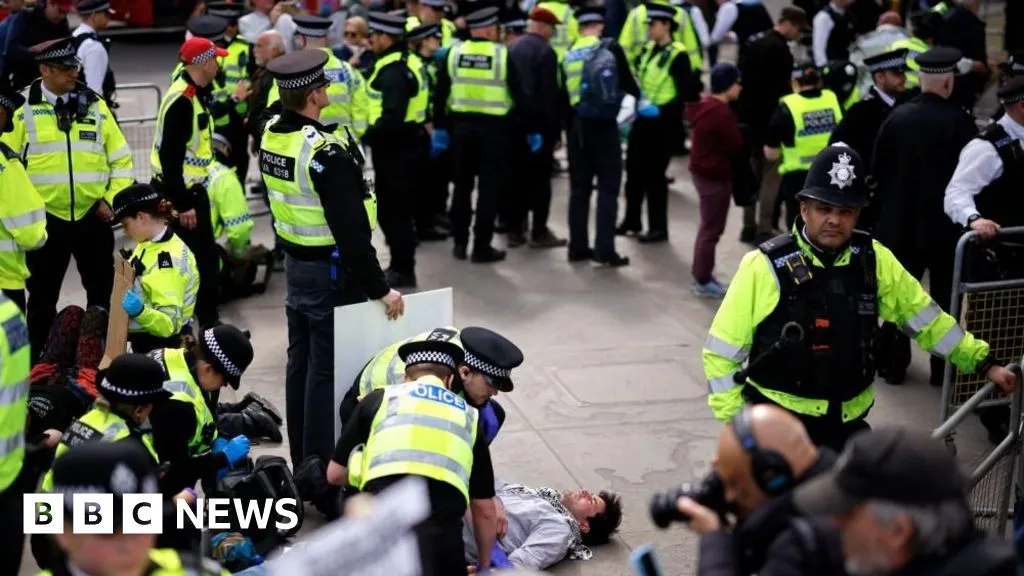
Police in London arrested more than 500 pro-Palestinian protesters supporting the Palestine Action group during a sit-down demonstration in Trafalgar Square on April 12, 2026. The arrests included individuals aged 18 to 87, reflecting a broad spectrum of participants in the protest.
The total number of arrests related to Palestine Action has now exceeded 3,000 since the group was designated a ‘terrorist’ organization in July 2025. The High Court ruled the ban on Palestine Action unlawful in February 2026, although the government has since appealed this ruling.
The demonstration aimed to oppose the UK Government’s complicity in Israel’s actions in Gaza, with many protesters displaying placards in support of Palestine Action. The police reported that Trafalgar Square had been cleared by early evening, following the mass arrests.
Among those arrested was an elderly pensioner, marking a poignant moment in the day’s events. Hundreds of demonstrators faced charges for their participation, which has raised significant concerns regarding civil liberties.
Amnesty International UK condemned the arrests, calling them “yet another blow to civil liberties.” Freya, a protester, emphasized the importance of continuing to show up, stating, “The government might flip-flop in their legal argument, but the morals of these people [here] do not change.”
Defend Our Juries criticized the government’s actions, describing them as a misguided crackdown on peaceful protest at home. The police’s approach has been met with backlash from various human rights organizations.
A judge has suspended all trials of those charged with supporting Palestine Action, scheduling a review for July 30, 2026. This decision adds another layer of complexity to the ongoing legal battles surrounding the group’s status and the government’s actions against its supporters.
As the situation develops, the implications of these arrests and the government’s stance on Palestine Action continue to unfold, with many calling for a reassessment of the legal framework governing such protests.