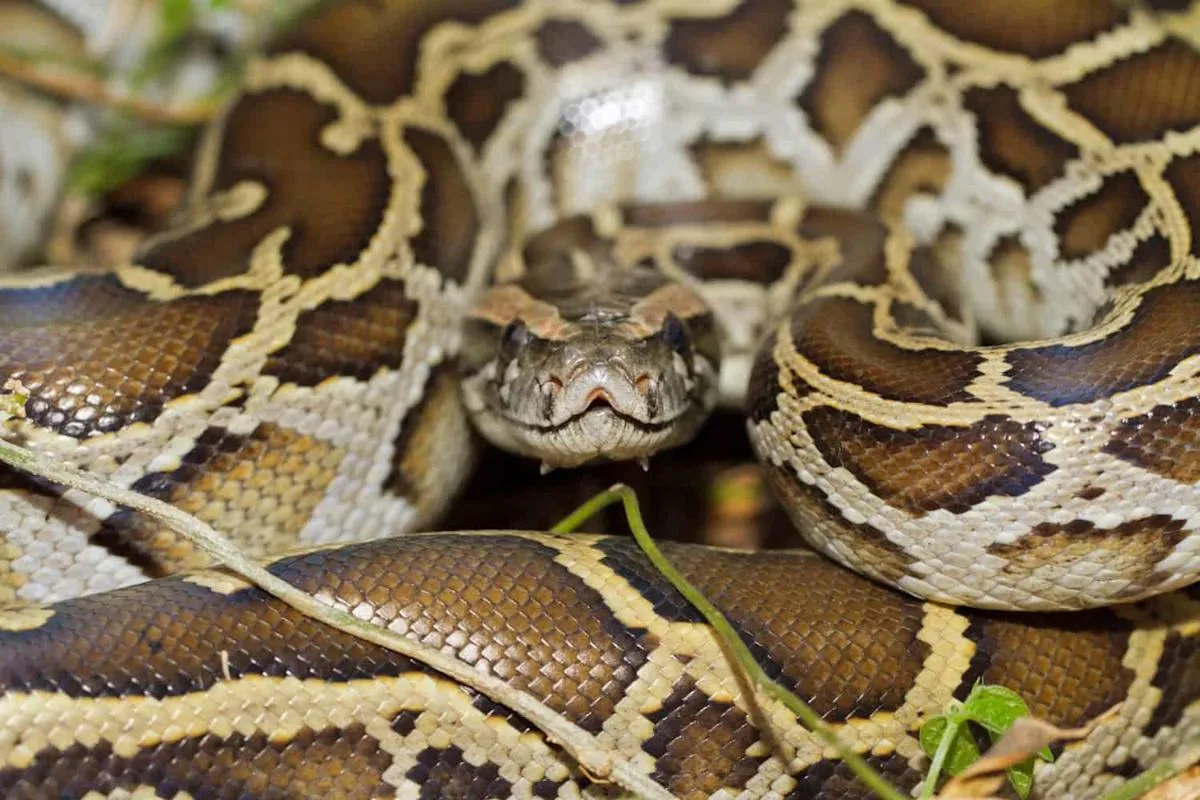
The Burmese python, an invasive species in the Florida Everglades, has been reported to have a significant impact on local wildlife. As of March 28, 2026, the situation remains critical, with Burmese pythons capable of growing up to 18 feet long and weighing over 200 pounds.
Recent studies indicate that these pythons have decimated the meso-mammal population in Florida by over 90 percent. Notably, raccoons have seen a staggering reduction of 99.3 percent, while opossums and bobcats have decreased by 98.9 percent and 87.5 percent, respectively.
In addition to these alarming statistics, marsh rabbits, cottontail rabbits, and foxes are now considered extirpated from most areas where pythons have successfully invaded. The ecological balance in the Everglades is under severe threat due to this invasive species.
The Burmese python kills its prey by constriction, effectively stopping blood flow to vital organs. A recent observation noted a Burmese python swallowing a 77-pound white-tailed deer, which weighed 66.9 percent of the snake’s mass at the time of consumption.
Efforts to control the Burmese python population have been ongoing, with the Python Action Team removing 1,022 pythons from Florida’s Everglades in 2025 alone. These efforts highlight the urgency of addressing the invasive species crisis in the region.
Burmese pythons were first introduced to Florida from Southeast Asia through the pet trade, with their numbers increasing significantly after Hurricane Andrew in 1992. This historical context underscores the long-term challenges faced in managing their population.
As the situation evolves, officials and conservationists continue to monitor the impact of Burmese pythons on the Everglades ecosystem. The fight against this invasive species is crucial for the preservation of Florida’s native wildlife.
Details remain unconfirmed regarding the latest population estimates of Burmese pythons in the Everglades, but the trend indicates a persistent threat to local biodiversity.