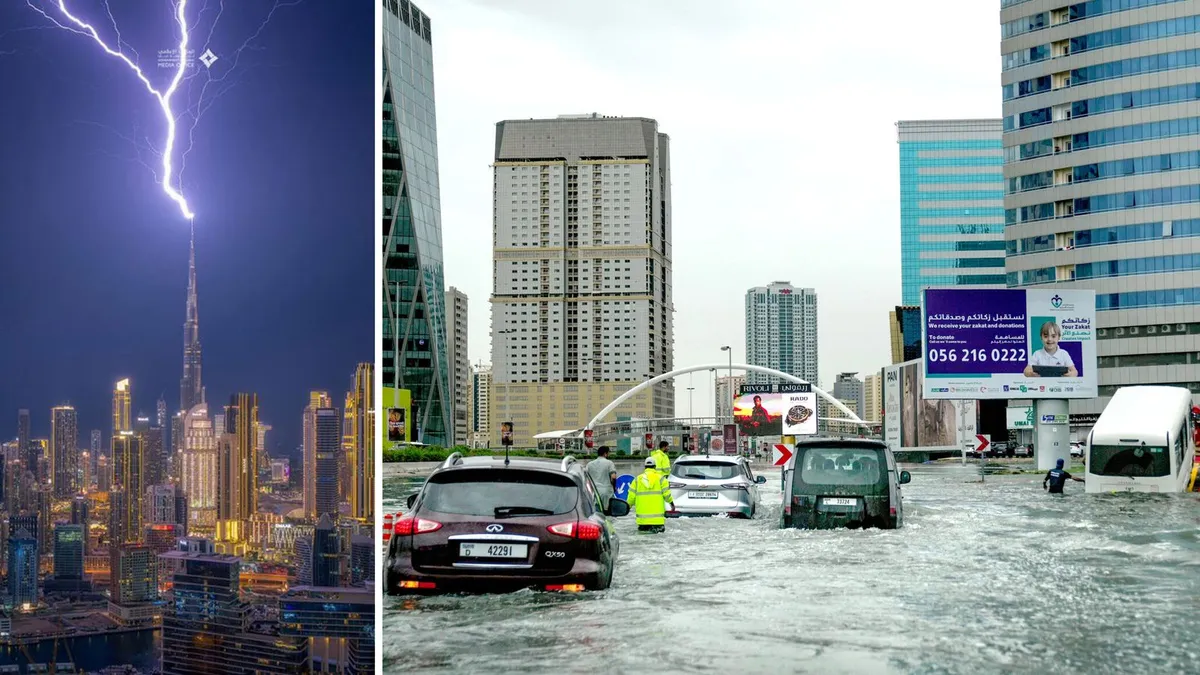
Dubai has been hit by overnight flooding after intense downpours on March 27, 2026. The National Centre of Meteorology (NCM) reported that heavy rain, thunderstorms, and strong winds swept across large parts of the UAE, prompting authorities to activate emergency measures and issue safety alerts.
Lightning struck the iconic Burj Khalifa, which stands at a height of 829 meters (2,722 feet), during the storms. The weather conditions have led to significant disruptions, with Dubai’s police force intensifying efforts to keep traffic moving smoothly amid the adverse weather.
Residents have been advised to check flight information due to the weather conditions affecting travel. The NCM has forecasted unstable weather conditions to persist until Friday morning, with rain of varying intensity expected, sometimes accompanied by lightning and thunder.
Moderate to fresh winds, with speeds ranging from 15 to 25 km/h, are anticipated to cause dust and sand to rise, reducing visibility. The maximum wind speed could reach up to 40 km/h, further complicating the situation.
Dubai Municipality teams are on standby to manage waterlogging and drainage in low-lying areas. In Sharjah, some of the strongest rainfall this week was recorded, with accumulations approaching 50 mm.
Authorities have advised caution on roads due to heavy rainfall and reduced visibility. The weather system affecting the region is driven by a combination of surface and upper-air low-pressure zones.
Since the beginning of the US-Israeli war with Iran, Dubai has come under frequent attacks from Iranian missiles and drones, adding to the city’s challenges during this period of severe weather.
As the situation develops, residents and visitors are urged to stay informed and heed official warnings regarding travel and safety.