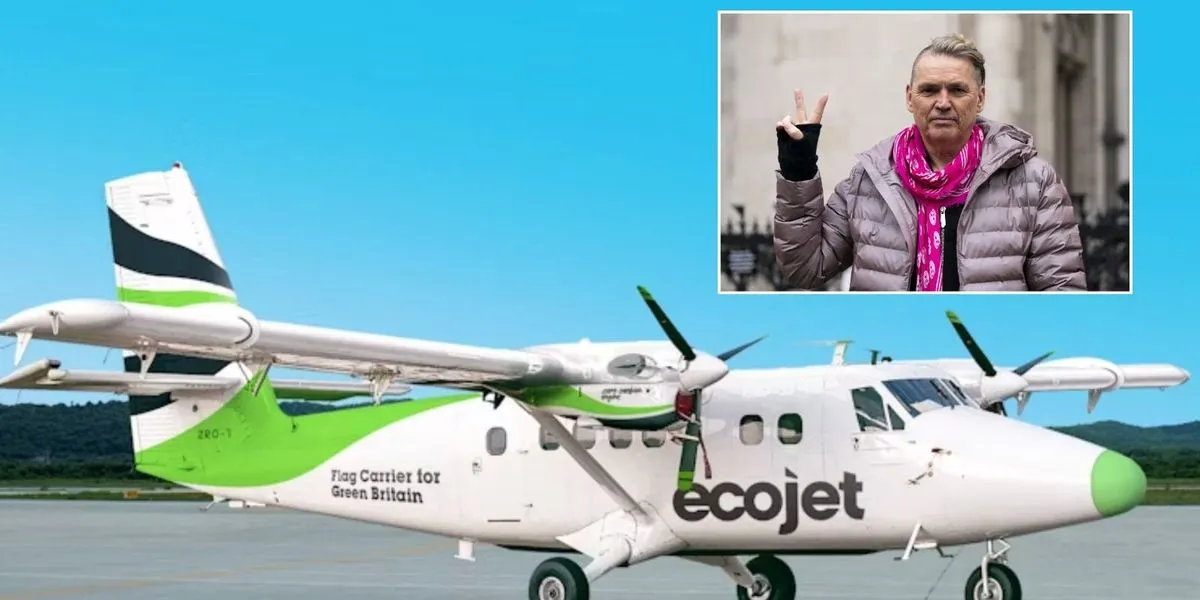
EcoJet Airlines Enters Liquidation
“This is a vital frontier in the move to net zero, green living, whatever you choose to call it – and it’s absolutely doable. It’s a matter of when, not if,” stated Dale Vince, the founder of EcoJet Airlines, as the company announced its collapse into voluntary liquidation.
Established in 2023 by Vince and Brent Smith, EcoJet Airlines aimed to become the world’s first fully electric airline. The ambitious start-up, which had plans to retrofit conventional aircraft with hydrogen-electric powertrains, never launched commercial passenger services before entering liquidation. The company had sought £20 million in funding to support its operations but was unable to secure the necessary financial backing.
EcoJet Airlines was envisioned as a zero-emission regional carrier, with its first planned route intended to connect Edinburgh and Southampton. The airline claimed that retrofitting existing aircraft could prevent around 90,000 tonnes of carbon emissions each year, a significant contribution to the fight against climate change.
Despite its promising vision, EcoJet faced numerous challenges typical of new aviation ventures developing low-emission technologies. “We remain committed to electrifying all forms of transport – aviation is the last frontier and the hardest. It’s taking longer than we hoped to get the technology and regulatory pieces of the puzzle in alignment, and so we’re pausing work at this time,” Vince added, reflecting on the hurdles faced by the industry.
Paul Dounis and Mark Harper from Opus Restructuring were appointed as provisional liquidators. They noted, “EcoJet was a start-up business and has no material assets. The members have elected to fund the liquidation process to ensure that the company’s employees receive their full statutory entitlements.” This statement underscores the company’s lack of significant assets and the challenges inherent in launching a new airline.
The collapse of EcoJet Airlines not only represents a setback for its founders but also highlights the broader difficulties faced by companies attempting to innovate in the aviation sector. The airline had ambitious plans for expansion into European destinations and long-haul flights, which now remain unrealized.
As the aviation industry continues to grapple with the transition to sustainable practices, the failure of EcoJet Airlines serves as a reminder of the complexities involved in developing low-emission technologies. The future of electric aviation remains uncertain, and the lessons learned from this venture may inform the next steps for other companies in the field.