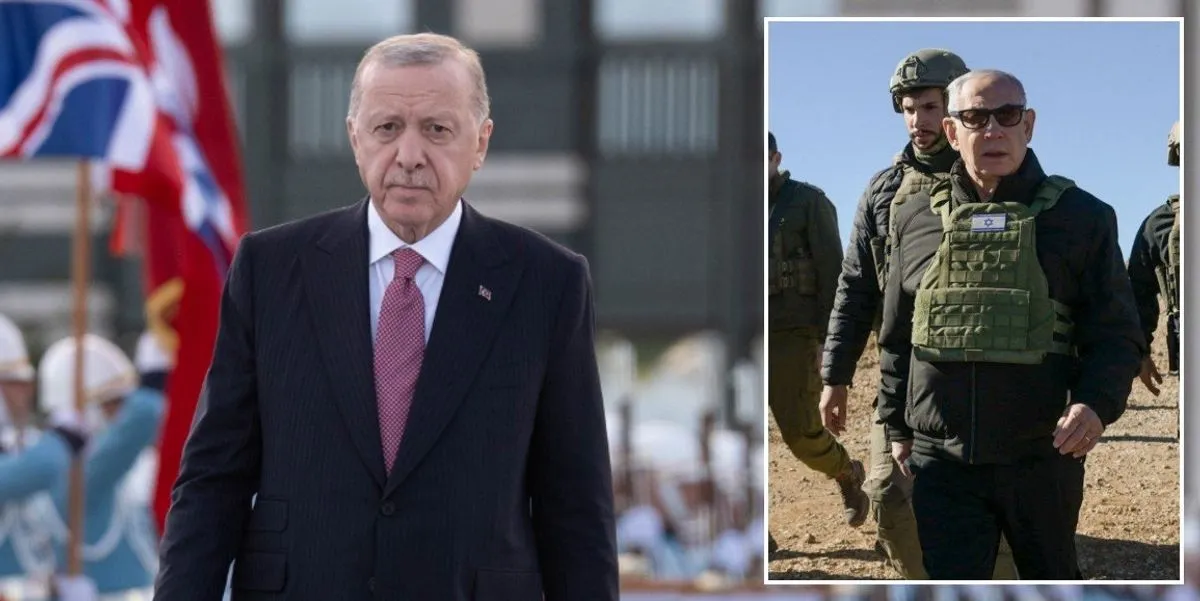
In a significant escalation of rhetoric, Turkish President Recep Tayyip Erdogan threatened military action against Israel on April 12, 2026, in response to its bombardment of Lebanon. Erdogan’s comments came amid a backdrop of increasing violence in the region, with over 1.2 million Lebanese displaced due to the ongoing Israeli attacks.
Erdogan accused Israeli Prime Minister Benjamin Netanyahu of being “blinded by blood and hatred,” describing Israeli actions as “barbaric” and labeling them as part of a “blood-stained genocide network.” He stated, “We will do the same to them,” indicating a willingness to retaliate against Israel’s military actions.
The Turkish government has taken formal steps in response to the situation, with a Turkish court indicting Netanyahu and 35 Israeli officials for their involvement in stopping the “Sumud” Gaza flotilla. Prosecutors in Turkey are pursuing sentences totaling up to 4,596 years for those implicated in the case, reflecting the seriousness with which the Turkish government views Israel’s actions.
In a related incident, the Israeli consulate in Istanbul was attacked, resulting in injuries to two police officers and the death of one attacker. The lead attacker, Yunus Emre Sarban, had previously been indicted on ISIS charges but was acquitted. Following the consulate attack, Turkish authorities rounded up 273 known ISIS suspects across the country, highlighting the ongoing security challenges Turkey faces.
Critics have pointed out the Turkish government’s lenient approach towards ISIS, while simultaneously cracking down on political dissent. Erdogan’s threats against Israel are seen as part of a broader narrative positioning Turkey as a defender of Palestinian rights, which has gained traction in recent years.
The Turkish Foreign Ministry further escalated tensions by describing Netanyahu as “the Hitler of our time,” a statement that underscores the deep animosity between the two nations. Erdogan’s rhetoric has drawn mixed reactions, with some supporting his stance on Palestinian rights while others criticize it as inflammatory.
As the situation develops, Erdogan’s administration continues to face scrutiny over its handling of both domestic and international issues. The Turkish government’s next steps remain uncertain, with many observers watching closely to see how these threats will translate into action.
Details remain unconfirmed regarding the potential for military action, but Erdogan’s statements have undoubtedly heightened tensions in an already volatile region, prompting responses from various international actors.