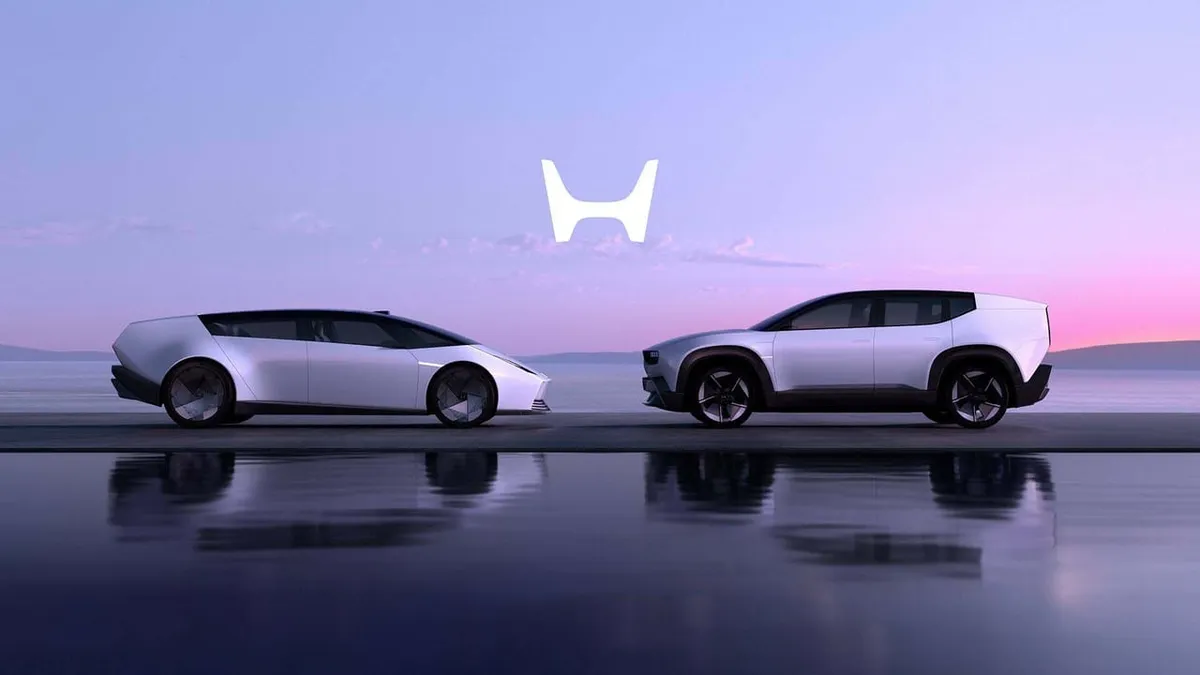
Honda has announced the cancellation of its electric vehicle projects, including the Honda 0 Series models and the electric Acura RSX, a decision driven by a significant decline in demand for electric vehicles (EVs) and shifts in the business environment. This move is expected to have substantial financial repercussions for the company.
The Honda 0 Series was initially showcased at CES 2025, with plans for a North American market launch in 2026. The series aimed to deliver a family of electric cars characterized as ‘thin, light, and wise,’ featuring an estimated EPA range of 300 miles and a battery capacity of 80-90 kWh.
However, Honda’s strategy, which was predicated on the belief that EVs would be the optimal solution for reducing emissions in transportation, has faced significant challenges. The company has stated that proceeding with production and sales of these models in the current environment would likely result in further losses over the long term.
In light of these cancellations, Honda anticipates write-offs and impairment losses, projecting restructuring costs to reach approximately $15.7 billion. The decision reflects broader trends in the automotive industry, where manufacturers like BMW are planning to introduce 40 new models under their Neue Klasse initiative.
Honda’s Asian business has also been impacted by the allocation of resources to electric vehicle development, further complicating the company’s operational landscape. The cancellation of these projects highlights a critical moment for Honda as it reassesses its position in the evolving EV market.
As Honda navigates these challenges, it has indicated that it will monitor the balance between profitability and market trends before deciding on future EV models. The company recognizes that consumer preferences are shifting, particularly in markets like China, where there is a growing emphasis on software-based features over traditional hardware specifications.
Details remain unconfirmed regarding the impact of these cancellations on other Honda projects, such as the Sonda Honda Mobility initiative and the anticipated Afeela 1 release. The uncertainty surrounding these developments underscores the volatility of the current automotive landscape.
As Honda reevaluates its electric vehicle strategy, the industry will be watching closely to see how it adapts to changing market dynamics and consumer expectations.