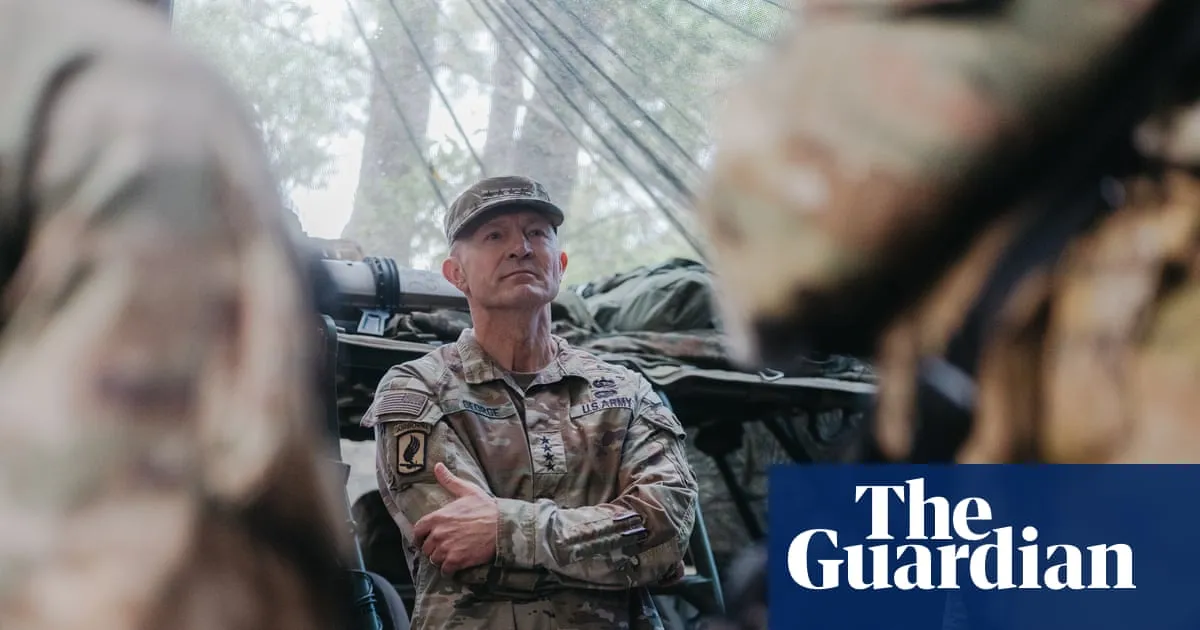
“General Randy A George will be retiring from his position as the 41st Chief of Staff of the Army effective immediately,” announced Sean Parnell, marking a significant transition in the leadership of the U.S. Army. George’s retirement comes as a surprise, given that he was confirmed for the role by the Senate in 2023 and was expected to serve until 2027.
Randy George, who received his commission as an infantry officer from the U.S. Military Academy at West Point in 1988, has had a distinguished military career. He has served in several major conflicts, including Operation Desert Shield, Desert Storm, Operation Iraqi Freedom, and Operation Enduring Freedom. His extensive experience in various leadership roles has shaped his approach to military strategy and personnel management.
Prior to his appointment as Chief of Staff, George served as the senior military assistant to Defense Secretary Lloyd Austin from 2021 to 2022. His tenure in this role provided him with a unique perspective on the intersection of military operations and national defense policy, which he brought to his position as Chief of Staff.
George’s immediate retirement was requested by Defense Secretary Pete Hegseth, who expressed gratitude for George’s decades of service. “The Department of War is grateful for General George’s decades of service to our nation,” Parnell stated, highlighting the impact George has had on the Army and its personnel.
During a recent visit to the U.S. Military Academy at West Point on March 25, George was praised for sharing valuable guidance with cadets, demonstrating his commitment to mentoring the next generation of military leaders. His contributions to the academy and the Army at large have left a lasting legacy.
As George steps down, the Army faces the challenge of transitioning to new leadership while maintaining continuity in its operations and strategic objectives. His departure comes at a time when the military is navigating complex global challenges and evolving defense needs.
Looking ahead, the Army will likely announce a successor to George, who will need to build on the foundation he has established. The leadership transition will be closely watched by military analysts and policymakers alike, as the new Chief of Staff will play a crucial role in shaping the future of the Army.
George’s retirement marks the end of an era for the Army, but his influence will continue to resonate within its ranks. “We wish him well in his retirement,” Parnell concluded, as the Army prepares for the next chapter in its leadership history.