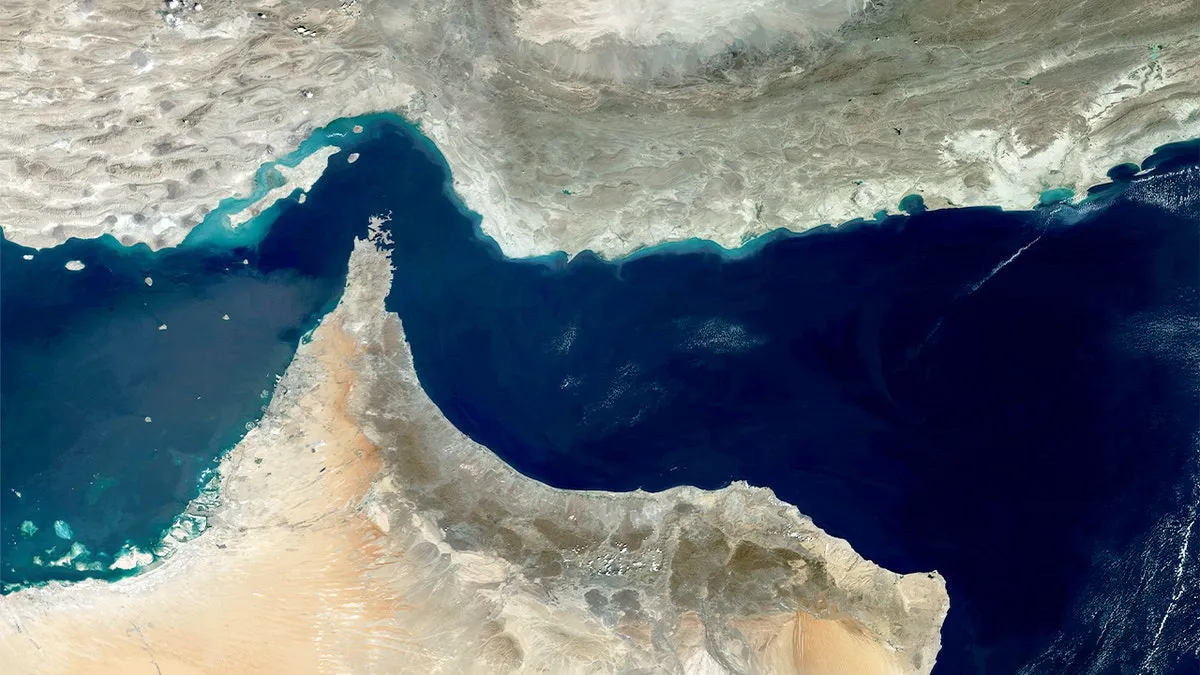
Donald Trump announced that the United States will begin blockading the Strait of Hormuz, a critical maritime route for global oil shipments, following the collapse of peace negotiations with Iran. The blockade is set to commence on Monday at 10 a.m. ET (2 p.m. GMT) and aims to prevent Iran from charging tolls to tankers navigating this vital waterway.
In a statement, Trump declared, “Effective immediately, the United States Navy, the Finest in the World, will begin the process of BLOCKADING any and all Ships trying to enter, or leave, the Strait of Hormuz.” This move comes after 21 hours of negotiations that failed to yield a ceasefire agreement between the two nations, which have been embroiled in conflict since the U.S. and Israel launched military operations against Iran on February 28.
The U.S. Navy will actively seek to interdict vessels that have paid Iran for passage since the onset of hostilities. This action is expected to significantly impact global oil supply, as traffic through the Strait of Hormuz has already slowed, affecting one-fifth of the world’s oil and liquefied natural gas shipments. Following Trump’s announcement, oil prices surged, with U.S. crude rising 8% to $104.24 a barrel and Brent crude increasing by 7% to $102.29.
Iran’s Revolutionary Guards have issued warnings that military vessels approaching the strait will be viewed as a violation of the ceasefire, heightening fears of further military escalation. Iran has also denied U.S. claims regarding its warships conducting mine-clearing operations in the strait, adding another layer of tension to the situation.
Since the beginning of the conflict, approximately 3,000 people have been reported killed in Iran, and around 100 tankers have transited the strait, with some paying up to 2 million dollars for safe passage. Observers note that controlling the Strait of Hormuz remains a key leverage point for Iran, as highlighted by analyst Ali Hashem, who stated, “Iran knows that controlling the Strait of Hormuz is still their main leverage.”
Oman’s Foreign Minister Badr Albusaidi has urged for the ceasefire to be extended and for negotiations to continue, reflecting the concerns of regional players about the escalating conflict. The international community is closely monitoring the situation, particularly nations dependent on Iranian oil, such as China, whose response to the blockade remains uncertain.
Details remain unconfirmed regarding how the U.S. will identify which vessels have paid Iran a toll, and the exact number of mines that may have been laid by Iran in the strait is also unclear. As the blockade takes effect, the potential for increased military confrontation looms, raising questions about the future of maritime security in one of the world’s most critical shipping lanes.