Introduction
Sun solar flares are powerful bursts of radiation that can have significant impacts on space weather and technology on Earth. Understanding these phenomena is crucial as they can influence satellite operations, communications, and even power grids. Recent activity in solar flares has brought renewed attention to their potential effects, highlighting the need for increased awareness in both the scientific community and the general public.
What are Solar Flares?
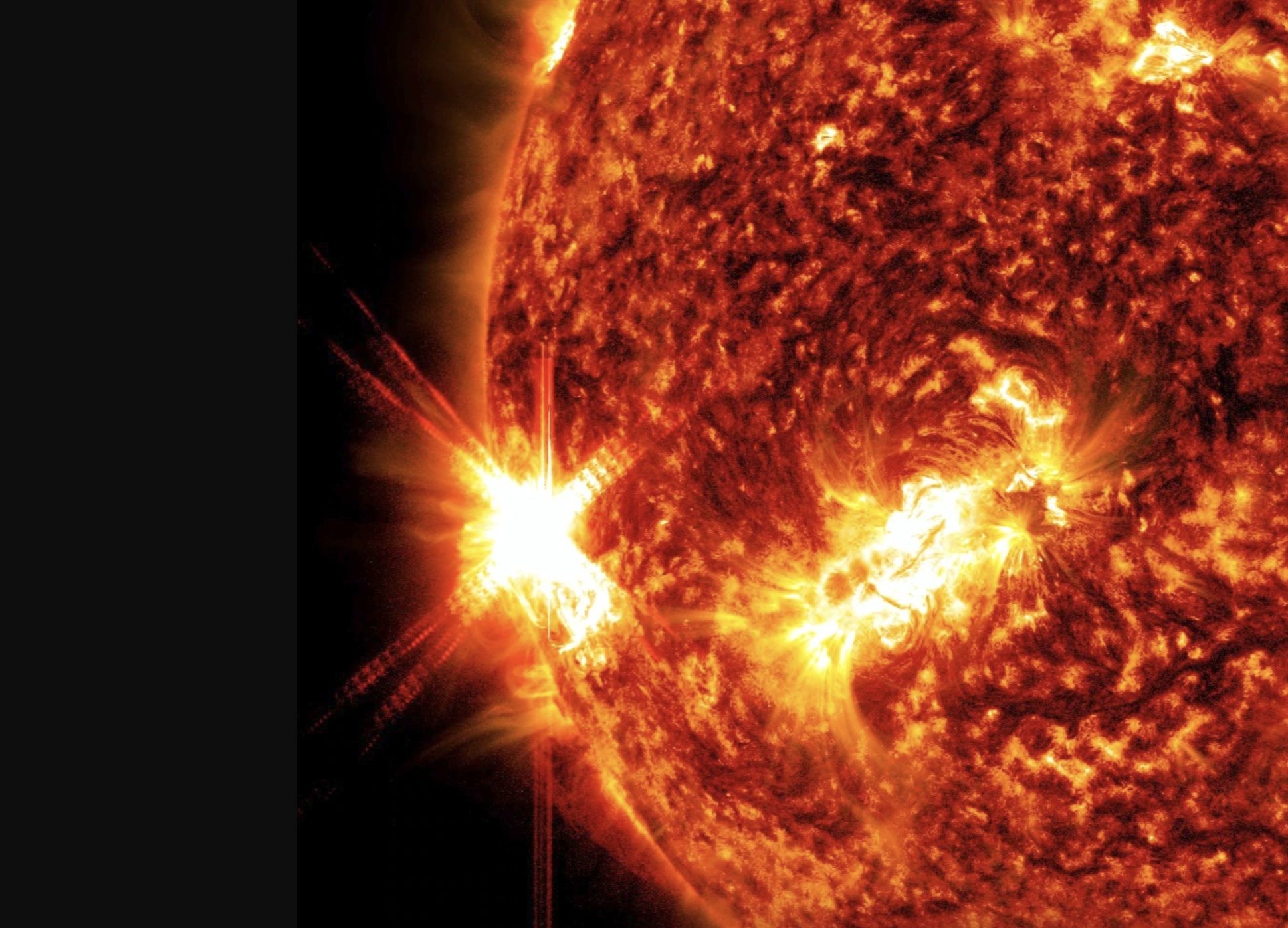
Solar flares are intense bursts of radiation that occur when the sun’s magnetic field lines rearrange and release energy. This release can emit X-rays and ultraviolet radiation, which can propagate through space and reach Earth in about eight minutes. The classification of solar flares ranges from A-class (smallest) to X-class (largest), with X-class flares capable of causing significant disruptions.
Recent Solar Activity
In recent weeks, astronomers have observed a series of X-class solar flares emanating from sunspot regions on the solar surface. One notable event occurred on October 9, 2023, when an X1.5 flare sparked concern among experts due to its potential to disrupt radio communications globally. According to the National Oceanic and Atmospheric Administration (NOAA), such flares can lead to radio blackouts and increased radiation exposure for high-altitude flights and astronauts in space.
Impacts on Earth
The consequences of solar flares can be diverse. For example, higher frequency radio communications can be temporarily shut down, affecting emergency services and navigation systems. Furthermore, geomagnetic storms induced by solar flares can result in beautiful auroras at the poles but can also disrupt power grids, as seen during the 1989 Quebec blackout caused by a severe geomagnetic storm.
Forecasting and Preparedness
Scientists continue to improve their forecasting models to anticipate solar flare activity. The advent of advanced satellite technology allows for better monitoring of the sun’s magnetic field and the prediction of flares. Public awareness campaigns and guidelines on how to respond to potential disruptions are also being implemented, emphasizing the importance of preparedness in mitigating the impact of these powerful solar emissions.
Conclusion
As our reliance on technology grows, understanding solar flares and their implications becomes increasingly important. The recent surge in solar activity serves as a reminder of the sun’s potency and the necessity for ongoing research and preparedness. By staying informed about solar weather events, we can better protect our infrastructure and safeguard our daily lives against the unpredictable forces of nature.