Introduction
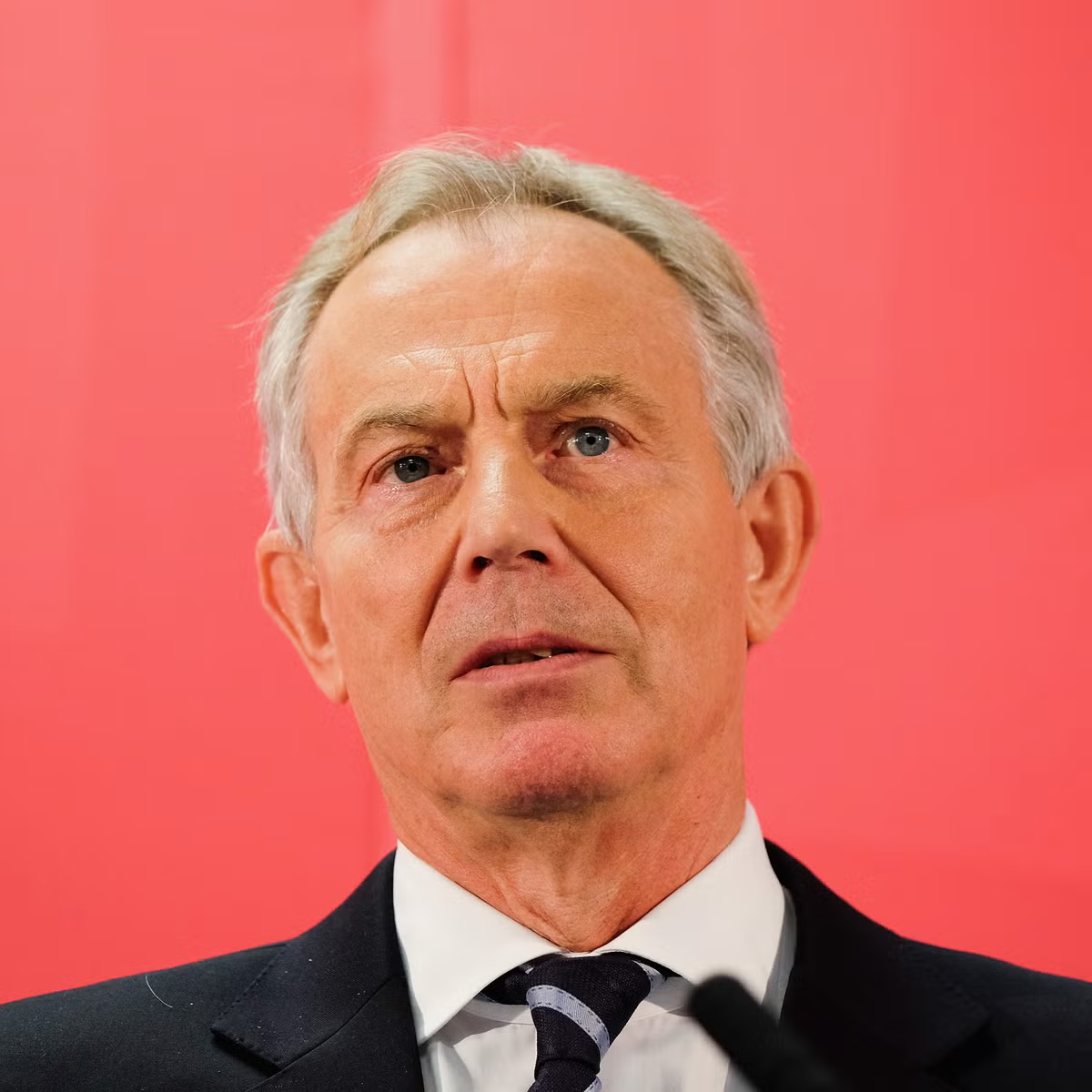
Tony Blair, the former Prime Minister of the United Kingdom, served from 1997 to 2007 and is a key figure in modern British political history. His tenure marked significant changes in the Labour Party and the UK’s domestic and international policies. Understanding Blair’s political legacy provides insights into contemporary politics and continues to elicit strong opinions, both supportive and critical, of his decisions and policies.
Blair’s Rise to Power
Blair became Labour leader in 1994, following the death of John Smith. He sought to modernise the party, moving it towards the political centre and appealing to a broader electorate. He famously articulated the concept of ‘New Labour,’ promising to move away from traditional leftist policies and embrace more centrist, business-friendly strategies. His charisma and effective use of media helped energise the electorate, culminating in a landslide victory in the 1997 general election.
Major Policies and Achievements
During his time in office, Blair implemented a range of significant reforms. His government focused on improving public services, notably education and health. The introduction of the National Minimum Wage in 1998 and the devolution of powers to Scotland, Wales, and Northern Ireland were pivotal in shaping a new political landscape. Blair’s commitment to addressing social issues pertaining to poverty and inequality led to numerous initiatives aimed at enhancing the quality of life for many citizens.
However, one of the most controversial aspects of Blair’s premiership was his decision to support the US-led invasion of Iraq in 2003. This decision has had lasting repercussions not only for international relations but also for Blair’s legacy, as he faced significant backlash from both the public and political opponents over the war and its aftermath.
End of Tenure and Legacy
Blair resigned in 2007, handing over the leadership to Gordon Brown amidst increasing public disillusionment with the Iraq War and a growing sense of dissatisfaction with his government. Post-premiership, Blair has remained influential as a political commentator and adviser, as well as through the Tony Blair Institute for Global Change. His contributions to international diplomacy and global issues such as climate change indicate a continued engagement with global challenges.
Conclusion
The legacy of Tony Blair continues to be debated and is marked by both his achievements and failures. As the UK navigates contemporary challenges, understanding the implications of Blair’s policies and leadership style remains crucial. His approach to governance and reform has paved the way for discussions around the evolution of political parties and public policy in the UK, making his impact on British politics both profound and lasting.